
ANONYMOUS PERSONAL CASE STUDY · SEPTEMBER 27, 2026
210 to 173 pounds: what changed—and what this cannot prove.
A 37-pound change is worth examining. It is not permission to credit one compound, copy a stack, or treat a before-and-after photo as laboratory evidence.
THE VISIBLE CHANGE
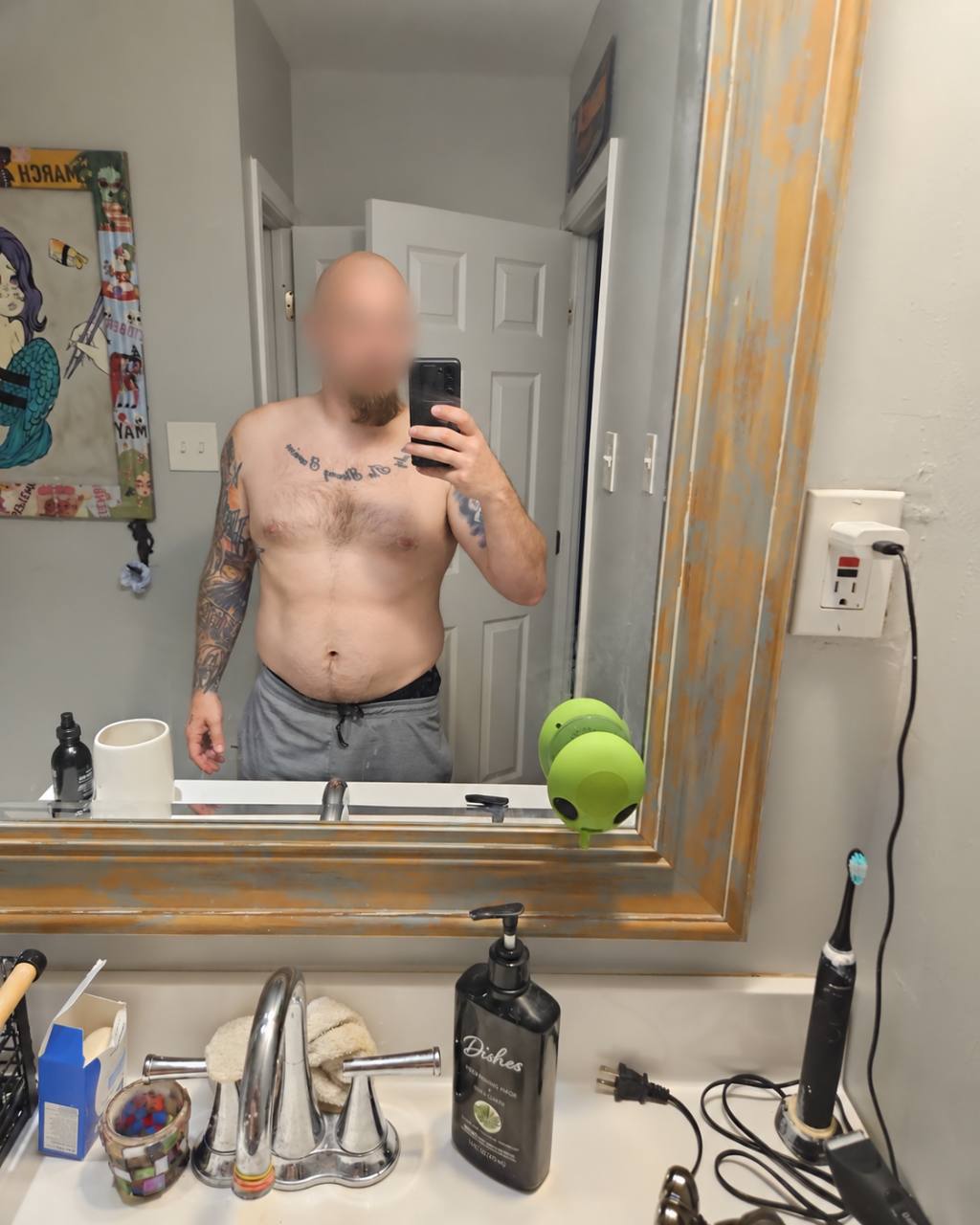
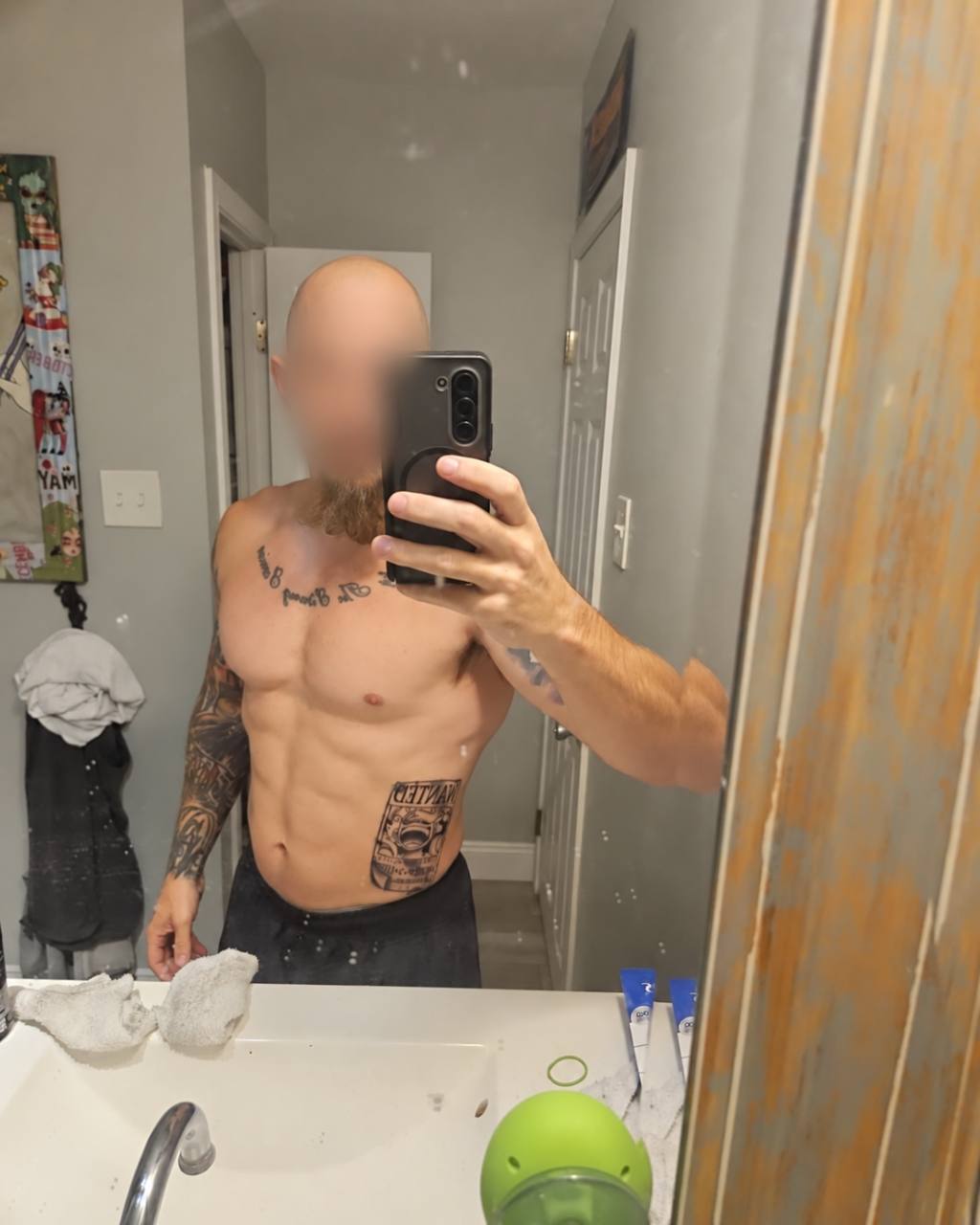
Same person. Same mirror. A very different frame.
These contributor-supplied images are presented as personal documentation. The face is intentionally blurred for privacy, and the images are not evidence of product identity, measured content, safety, or causation.
WHY THIS STORY IS DIFFERENT
No miracle claim. No anonymous vial treated as proof.
The contributor began at 210 pounds over Memorial Day weekend and later weighed 173 pounds. During that period, body weight, food intake, training consistency, recovery, strength, and the reported research-compound mix all changed.
That makes the transformation interesting—but scientifically messy. A single before-and-after account cannot isolate the effect of retatrutide, tesamorelin, CJC-1295/ipamorelin, MOTS-c, resistance training, calorie intake, or any interaction among them.
This case study records what happened, separates observation from inference, and explains why product verification remains a different question from visible progress.
SELF-REPORTED TIMELINE
What was used, and for how long.
This timeline documents one contributor’s account. The amounts are included for transparency, not as a template, recommendation, or instruction.
RETATRUTIDE
12-week increase, then lower maintenance
Reported starting amount: 0.5 mg. The amount increased over 12 weeks to 4 mg, followed by a reported 0.5 mg maintenance amount.
TESAMORELIN
12 weeks
Reported at 1 mg, five times per week during the 12-week period.
CJC-1295 / IPAMORELIN
4 weeks
Reported at 0.5 mg, five times per week during a shorter four-week block.
MOTS-C
8 weeks
Reported three times per week, beginning at 2 mg and later reaching 4 mg per reported amount.
Important: Retatrutide remains investigational. Lilly states that it is not approved or available for public use and warns that products claiming to be retatrutide outside its clinical trials may contain the wrong ingredient, contaminants, or too much or too little active ingredient.
THE WORKOUT SPLIT
The visible change was backed by repeatable work.
The training log used a push, pull, and lower-body rotation with recovery days instead of forcing seven straight days of hard training. The goal was progression that could be repeated—not exhaustion for its own sake.
Chest, shoulders, triceps
Incline pressing, chest press, pec deck, shoulder press, and triceps work. Progress came from adding reps first and load second.
Back, rear delts, biceps
Rows, pulldown patterns, rear-delt work, and curls formed the pull session, with the same repeatable progression rule.
Quads, posterior chain, calves, core
Logged work included leg press, leg extensions, Romanian deadlifts, hamstring curls, standing calf raises, knee raises, cable crunches, and cable wood chops.
Planned—not accidental
Walking, mobility, hydration, protein, sleep, and honest pain ratings were treated as part of the program rather than time away from it.
WHAT THE EVIDENCE SAYS
Clinical results provide context. They do not validate this stack.
A 2023 randomized phase 2 trial found substantial average weight reductions across retatrutide groups over 48 weeks, with gastrointestinal events reported most often and dose-dependent heart-rate increases also observed. Those controlled trial results do not authenticate a third-party product or predict one person’s outcome.
By September 2026, Lilly had announced topline phase 3 results and said it planned an FDA submission in 2027. Retatrutide nevertheless remained investigational and unapproved. That status matters when interpreting any product sold under the name.
A personal result can document a change. It cannot prove product identity, measured vial content, purity, sterility, or cause.
THE QUESTIONS A PHOTO CANNOT ANSWER
Progress is not a substitute for a COA.
Even a dramatic transformation leaves the product-evidence questions untouched.
- 01Identity
Was the expected compound detected with an appropriate method? - 02Measured quantity
Did the laboratory measure how much material was present—not merely report purity? - 03Lot match
Does the report trace to the exact product lot being evaluated? - 04Safety-related panels
Were sterility, endotoxin, residual solvents, or contaminants actually tested?
CHECK THE DOCUMENT, NOT THE HYPE
Use the transformation as a question—not an answer.
Compound IQ separates visible outcomes from product evidence. Scan a certificate for missing signals, learn how to verify a laboratory record, or compare our document reviews before following a seller’s headline.
CASE-STUDY FAQ
Short answers without turning one result into a protocol.
Did retatrutide cause the full 37-pound change?
That cannot be determined from one personal account. Training, food intake, starting weight, adherence, time, and multiple self-reported research compounds changed during the same period, so the result cannot be assigned to one variable.
Is retatrutide FDA approved?
No. As of September 2026, retatrutide remains investigational. Lilly says it is not available for public use and plans to submit it to FDA in 2027.
What workout split was used?
Training followed a repeatable push, pull, and lower-body rotation with recovery days. Logged sessions included progressive overload on presses, leg press, Romanian deadlifts, leg extensions, hamstring curls, calves, and core work.
Is the peptide timeline a recommended protocol?
No. It is an anonymous contributor's self-reported history, included for transparency. It is not a dose recommendation, treatment plan, or instruction for preparation or administration.
Why does a COA matter in a transformation story?
A physique change cannot authenticate what was in a vial. Identity, purity, measured quantity, lot traceability, sterility, and endotoxin require separate evidence, and no single test answers every question.
PRIMARY SOURCES
Context for the retatrutide evidence boundary.
- Eli Lilly: What to know about retatrutide ↗Current investigational status, development program, public-use warning, and announced phase 3 context.
- Jastreboff et al., New England Journal of Medicine (2023) ↗Randomized phase 2 obesity trial covering weight change and reported adverse events over 48 weeks.
- ClinicalTrials.gov: TRIUMPH-1 ↗Official study record for the phase 3 trial in adults with obesity or overweight.
The contributor’s weight, training, and compound timeline are self-reported and not independently verified. Sources provide clinical and regulatory context; they do not validate the contributor’s products or establish causation.
FREE TWO-PAGE REFERENCE
Keep the personal story separate from the product evidence.
Get the printable checklist, five common red flags, and a quick document-coverage guide. The PDF unlocks immediately after signup.
Instant PDF access. By subscribing, you agree to receive Compound IQ research education and occasional partner updates. Unsubscribe anytime.